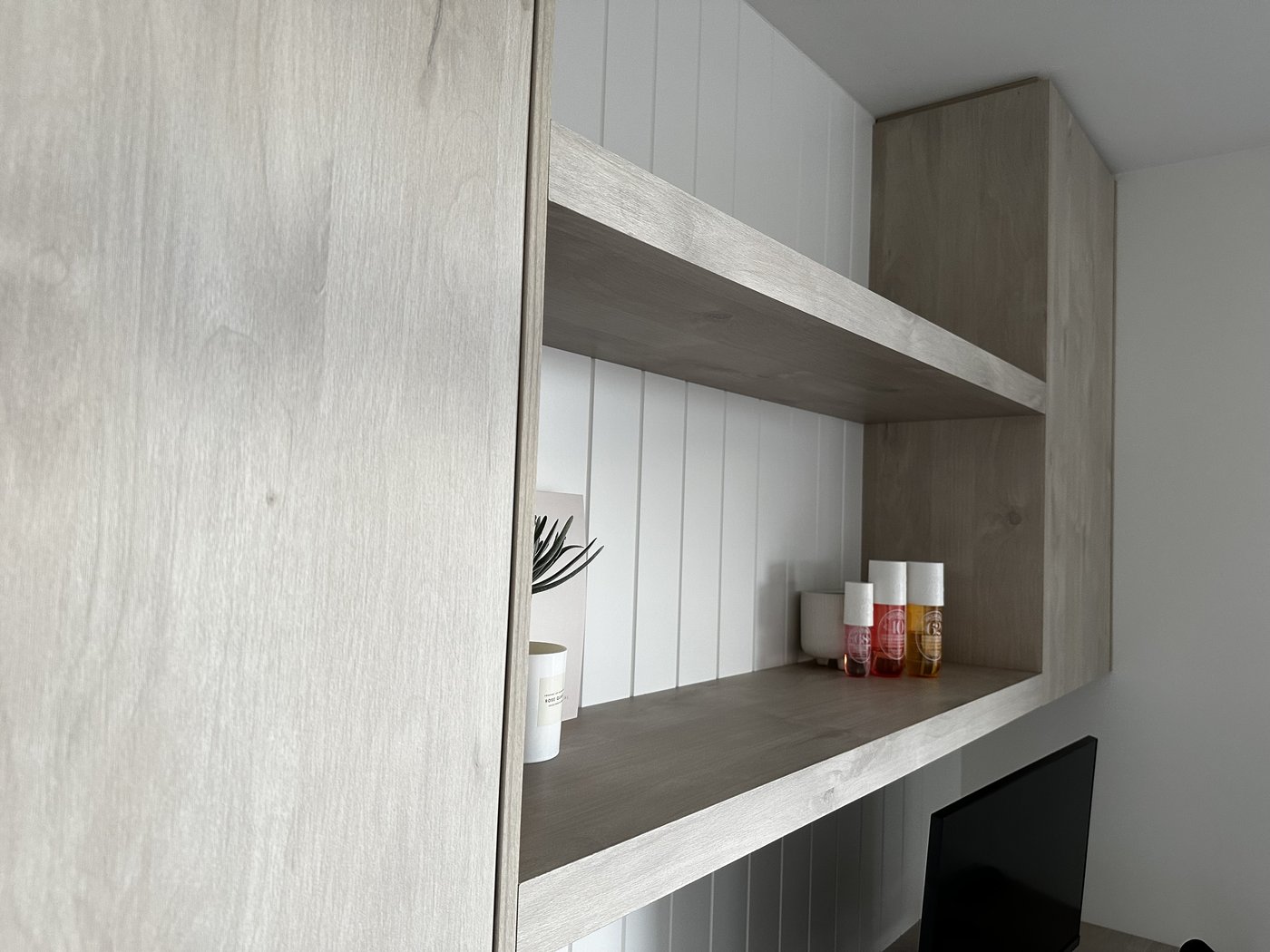
Why the cabinet maker choice matters so much
More than any other decision in a kitchen renovation, the quality of your cabinet maker determines the outcome. A good design with mediocre execution produces a mediocre kitchen. A straightforward design executed with precision and quality materials produces a kitchen that holds up and looks good for decades.
The right type of provider for your project
Before evaluating individual cabinet makers, get clear on the type of provider appropriate for your project. Custom cabinet makers (trade-only, no showroom) produce the highest-quality work but have longer lead times and typically require a clear brief. Kitchen renovation companies offer design, supply, and installation as a package — convenient but with higher overhead. Supply-and-install operators offer flat-pack kitchens professionally installed — good for standard layouts at competitive prices.
Questions worth asking every provider
- Can I see 3 recent projects similar to mine — ideally in the home rather than in photos?
- What material do you use for cabinet carcasses? (Plywood vs MDF vs particleboard — relevant for durability and moisture resistance)
- What hardware brands do you use for hinges and drawer systems?
- Is your quoting price fixed or subject to variations? How are variations handled?
- Who installs the kitchen — your own employees or subcontractors?
- What's your current lead time from signed order to installation?
- What warranty do you provide on the cabinets and on the installation?
- Are you licensed? (Relevant in most states for work above a threshold value)
Visit a project in progress if you can
Seeing a cabinet maker's work mid-installation is more revealing than a finished showroom kitchen. Look at how they handle wall returns, scribing, and filler panels. Neatness in the unseen parts of a kitchen is a good indicator of overall quality.
Red flags to watch for
Reluctance to provide references. A good cabinet maker who has happy clients will provide references without hesitation. Reluctance usually means the references aren't good.
Vague material specifications. If a provider won't specify the material, brand, or product code for key components, they have room to substitute cheaper alternatives after you've agreed to price.
Large upfront deposit requests. A deposit of more than 30% before work begins creates financial risk for you. Standard practice is 10–20% deposit, progress payment on installation, balance on completion.
No written contract. Every kitchen project above a few thousand dollars should have a written contract specifying scope, materials, payment schedule, variation process, and completion timeframe.