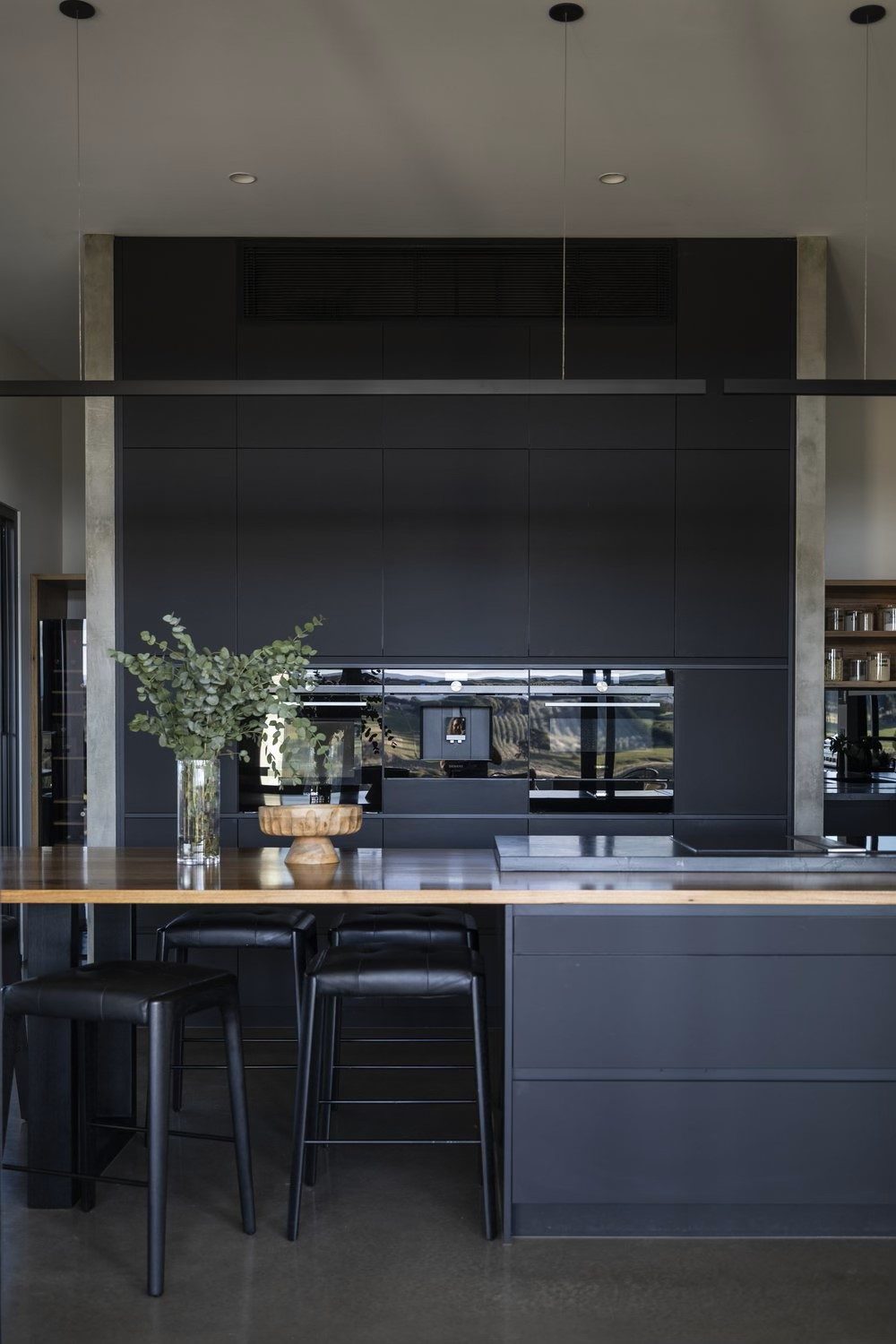
Appliance selection is one of the most consequential decisions in a kitchen renovation — not just for the cooking experience, but because appliance dimensions directly drive cabinet sizing. Lock your appliances in before your cabinet design is finalised. A change to oven or cooktop selection after cabinet sign-off typically generates $500–$2,000 in variation fees.
Ovens
The oven category has shifted substantially toward multifunction and steam-combination ovens. Multifunction (also called multisystem) ovens combine fan-forced, conventional, grill, and defrost modes in a 60cm cavity and represent the bulk of the mid-range market. Steam combination ovens add a water reservoir for steam and sous-vide cooking modes — a genuine functional upgrade for serious home cooks.
| Oven type | Brands (AU market) | Price range | Notes |
|---|---|---|---|
| Multifunction 60cm | Bosch, AEG, Smeg, Westinghouse | $1,200–$3,500 | Majority of residential market |
| Steam combination 60cm | Miele, Gaggenau, V-Zug, AEG | $3,500–$12,000 | Premium cooking functionality |
| Pyrolytic self-cleaning | Bosch, Neff, Miele, Smeg | $2,000–$6,000 | High-temp burn-off of residue |
| Double oven 90cm | Smeg, Ilve, Bertazzoni | $4,000–$18,000 | Freestanding or built-in, statement piece |
| Integrated microwave/combi | Bosch, Miele, Neff | $1,200–$4,500 | Flush-fit in cabinetry — adds trim-kit cost |
Most built-in ovens require a 595mm wide × 560–580mm high × 540–570mm deep cavity. Verify the exact cutout dimensions with your appliance supplier before your cabinet design is finalised — they vary by brand and model. A 2mm error requires a cabinet remake.
Cooktops
The cooktop decision has become a values question as much as a technical one. Gas has been the preferred choice of serious home cooks for decades; induction has largely overtaken it on safety, energy efficiency, and ease of cleaning; and the regulatory landscape around gas connections in new builds is shifting in several Australian states.
| Cooktop type | Key brands | Price range | Best for |
|---|---|---|---|
| Induction 60cm (4 zone) | Bosch, AEG, Miele, Fisher & Paykel | $900–$4,500 | Energy efficiency, safety, easy clean |
| Induction 90cm (5 zone) | Miele, Gaggenau, V-Zug | $2,500–$8,000 | Heavy use, multiple pots simultaneously |
| Gas 60cm (4 burner) | Smeg, Ilve, Bertazzoni, Westinghouse | $600–$3,500 | Traditional cooking, immediate heat response |
| Gas 90cm (5–6 burner) | Smeg, Ilve, Bertazzoni | $2,000–$8,000 | Serious cooking, statement piece |
| Induction with integrated rangehood | Bora, Gutmann, Novy | $4,500–$14,000 | Open plan, island cooktops, no overhead hood |
Rangehoods
The rangehood is the most under-specified appliance in most kitchens. Homeowners consistently choose on looks and underspecify on extraction capacity — and live with the result (cooking smells throughout the house) for the entire life of the kitchen. The rule is simple: ducted is always better than recirculating, and bigger is better than undersized.
| Rangehood type | Extraction | Price range | Notes |
|---|---|---|---|
| Canopy (wall-mount) | 700–1,200 m³/hr | $600–$3,500 | Most common; over wall cooktop |
| Island/ceiling suspended | 800–1,400 m³/hr | $1,800–$8,000 | Over island; statement piece |
| Undermount (cabinet-integrated) | 600–1,000 m³/hr | $900–$3,000 | Hidden in overhead cabinet; minimal visual |
| Recirculating (filterless) | 400–700 m³/hr effective | $400–$1,500 | No external duct — less effective, for apartments |
| Inline/remote motor | 600–1,200 m³/hr | $1,200–$4,000 | Quietest option; motor remotely mounted |
The rangehood should be at least as wide as the cooktop, ideally 100–150mm wider on each side. For a 90cm cooktop, specify a 90cm or wider rangehood. Minimum clearance above a gas cooktop is 650mm; above induction, 500–600mm (check manufacturer specs). Under-sizing a rangehood is the single most regretted appliance decision in kitchen renovations.
Dishwashers
The dishwasher market is largely standardised at 60cm freestanding or integrated, with premium brands differentiating on noise levels, wash programme quality, and cutlery tray design. Integrated (panel-faced) dishwashers add $400–$900 for the door panel and fittings but create a cohesive kitchen appearance; fully integrated (hidden control) models add another $200–$600 over semi-integrated.
| Type | Key brands | Price range | Notes |
|---|---|---|---|
| Freestanding 60cm | Bosch, AEG, Fisher & Paykel, Miele | $800–$3,500 | Visible control panel; easier to replace |
| Semi-integrated 60cm | Bosch, Miele, AEG, Smeg | $1,200–$4,500 | Panel-fronted, controls on top edge |
| Fully integrated 60cm | Miele, Bosch, V-Zug, Gaggenau | $1,800–$7,000 | Fully hidden; most seamless appearance |
| Drawer dishwasher (single) | Fisher & Paykel | $1,400–$2,000 | Good for small households or supplementary |
| Double drawer dishwasher | Fisher & Paykel | $2,200–$3,500 | Run independently; popular in Australian kitchens |
Budget guide: appliance packages
| Package level | What's included | Approximate total |
|---|---|---|
| Entry / rental | Induction cooktop, canopy rangehood, multifunction oven, freestanding dishwasher — value brands | $3,000–$5,500 |
| Mid-range residential | Induction cooktop, canopy rangehood, multifunction oven, semi-integrated dishwasher — Bosch/AEG tier | $6,000–$10,000 |
| Premium | 90cm induction, island hood, steam-combi oven, fully integrated DW — Miele/Gaggenau tier | $14,000–$30,000+ |
Frequently asked questions
Induction is faster to boil, more energy-efficient, safer around children, and significantly easier to clean. Gas provides visual flame feedback and works during power outages. For most households, induction is the better practical choice. If you're an avid wok cook or rely on high-output gas burners for specific techniques, gas or a hybrid (gas + induction) is worth considering. Check your state's regulations for new gas connections — several states are moving to restrict gas in new builds.
Before your cabinet design is signed off. Appliances drive cavity dimensions, cutout sizes, and in the case of a rangehood, ducting positions. Changing appliance selection after cabinet manufacturing has started typically costs $500–$2,000 in variations and delays the project. Select the exact model and confirm the installation datasheet dimensions before finalising any cabinet drawings.
For serious home cooks and households who use kitchen appliances heavily, yes — Miele products consistently outperform mid-range alternatives in longevity, wash quality, and cooking precision. For light-use households or investment properties, Bosch Series 8 and AEG 9000 series deliver excellent performance at a materially lower cost. The Miele premium is justified by genuine performance and durability rather than brand perception alone.
Generally, source appliances independently rather than through the kitchen company — you'll typically save 15–30% on the same products. The exception is when the kitchen company is integrating panel-faced appliances into the cabinetry and needs to coordinate the panel dimensions precisely; in that case, let them supply to ensure dimension accuracy. Always get a separate appliance quote to compare against the kitchen company's supply price.