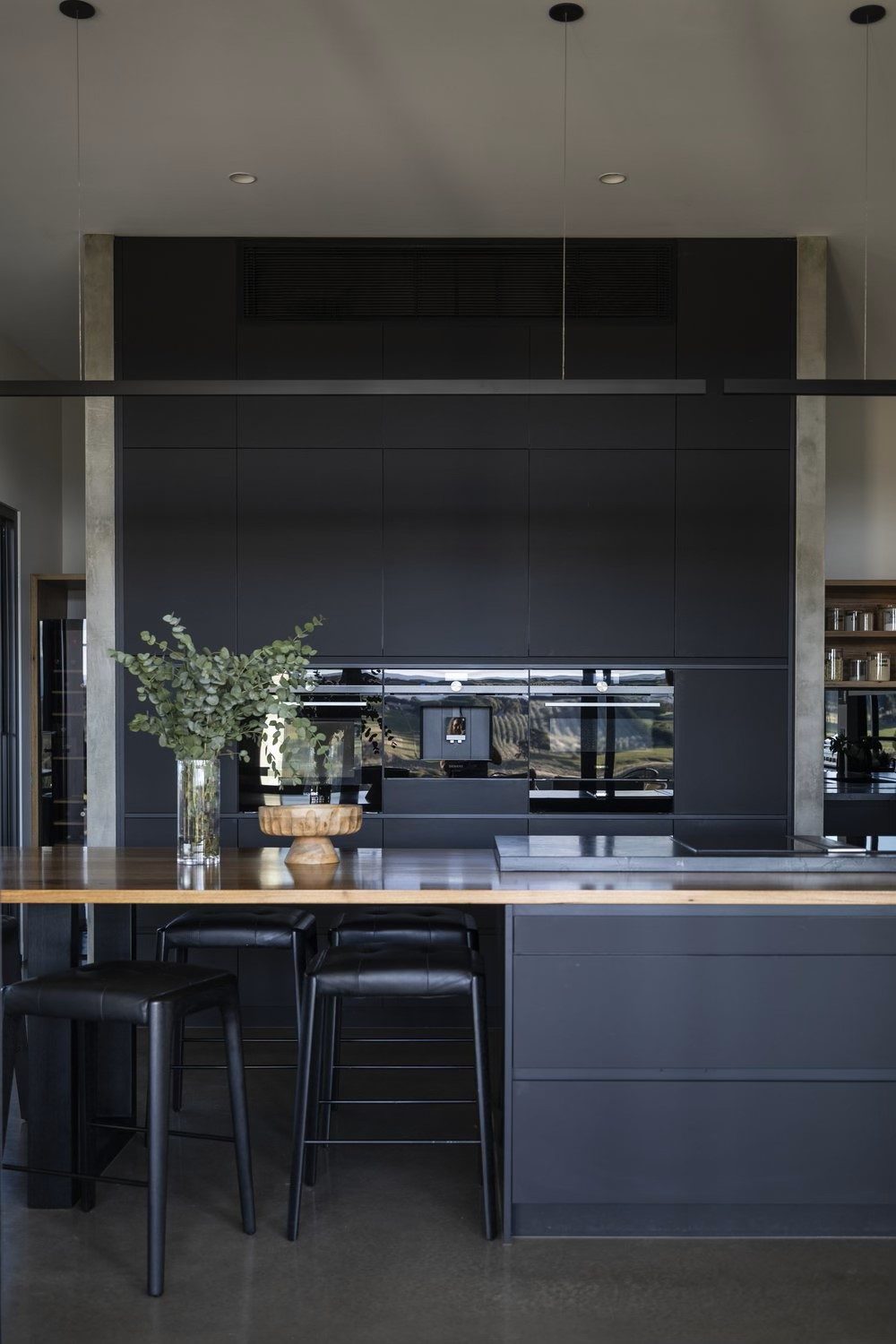
Kitchen renovation budgets have a consistent failure mode: they run out in the wrong places. Too much spent on visible but replaceable items, not enough on the things you'll live with every day. This guide outlines where spending the premium pays back and where saving is smart.
Worth spending on: hardware quality
Blum hinges and drawer runners are the benchmark for a reason — they are substantially more durable, smoother, and adjustable than generic alternatives. The price difference between budget and quality hardware is $800–$1,500 on a medium kitchen. You will use your kitchen drawers and doors hundreds of times a week. This is not where to save.
Worth spending on: benchtop quality
The benchtop is the most used surface in the kitchen. You'll prep food on it, rest hot pans near it, spill on it, and look at it from every angle. A quality benchtop — engineered stone in a neutral colour at 20mm, or porcelain if you cook seriously — will look better and perform better over the life of the kitchen than a laminate upgrade would. This is worth the premium.
Worth spending on: rangehood effectiveness
An undersized or underpowered rangehood is one of the most common regrets after a kitchen renovation. The rule is: ducted is better than recirculating, and bigger is better than undersized. Budget rangehoods are quieter by being less effective. If you cook regularly, spend $800–$2,500 on a ducted rangehood with appropriate extraction capacity for your cooktop.
Spend on things you interact with every day (hardware, benchtop, rangehood). Save on things you look at occasionally (feature tiles on a secondary wall, decorative lighting, handles — these are easily upgraded later if your taste changes).
Where to save: appliance brands
The performance difference between a $1,200 oven and a $4,500 oven is real but smaller than the price gap suggests for most home cooking. Unless you cook seriously and will genuinely use the additional functionality, mid-range appliances from reputable brands (Bosch, AEG, Fisher & Paykel) deliver excellent performance at a fraction of premium European pricing. Save here unless cooking is a genuine priority.
Where to save: decorative elements
Feature pendant lighting, decorative tiles behind open shelving, and statement handles are all easily and cheaply changed later. Don't let these items consume budget that would be better spent on structural quality. The ceramic tile you're in love with today will look dated in 8 years. The quality of your drawer runners won't.
Where to save: benchtop edge profiles
A 40mm benchtop or a mitre-edge profile looks premium but costs $1,500–$4,000 more than 20mm with a square edge. A 20mm square-edge engineered stone looks clean and contemporary in most kitchen styles and costs significantly less. Save here unless the visual premium is genuinely important to you.
The one thing most people under-spend on
Storage solutions inside cabinets — pull-out pantry inserts, deep drawer organisers, corner solutions. These are boring purchases that make a genuine daily difference. Most people discover they should have included more of them after they've moved in. Budget $1,500–$3,000 for internal storage accessories before you cut anything else.
Frequently asked questions
No. Mid-range, durable, and easy-to-repair appliances are the right choice for a rental. AEG, Bosch, and similar brands offer excellent reliability without the premium pricing of Miele or V-Zug. The marginal rental premium from upgraded appliances rarely recovers the cost difference.
For a primary residence you plan to stay in, yes. The performance and visual difference is real and you'll benefit from it daily. For a short-term investment renovation or a property you're flipping quickly, a quality laminate with a well-executed edge can be a smart choice.
Scope creep (one change leads to others), appliances (selected after the budget was set), handles (chosen after installation and priced per-unit without adding up the total), and variations to the original scope (moving a wall that looked easy, a structural find behind the wall).
Some aspects lend themselves to staging — you can replace handles later, change pendant lights, or add a splashback — but anything structural (cabinetry, benchtop, plumbing positions) is much more disruptive and expensive to change after initial installation. Get the fundamentals right first.