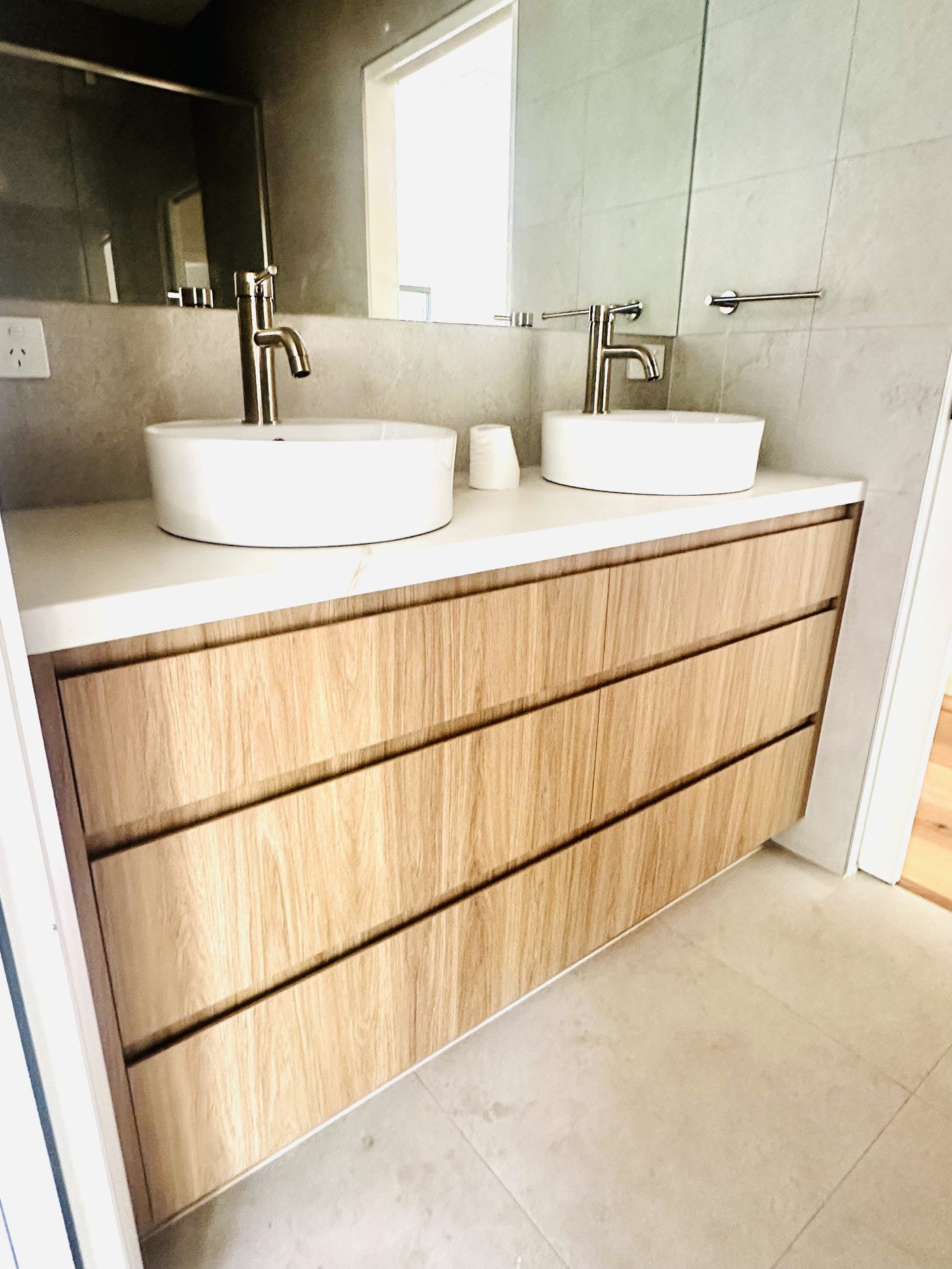
The coastal kitchen at its best isn't about seashell prints and ship-rope accessories — it's about a palette and materiality that genuinely references the Australian coastal environment. Light that fills the room, materials that feel natural and unforced, and a relaxed register that functions well for everything from breakfast to a dinner party.
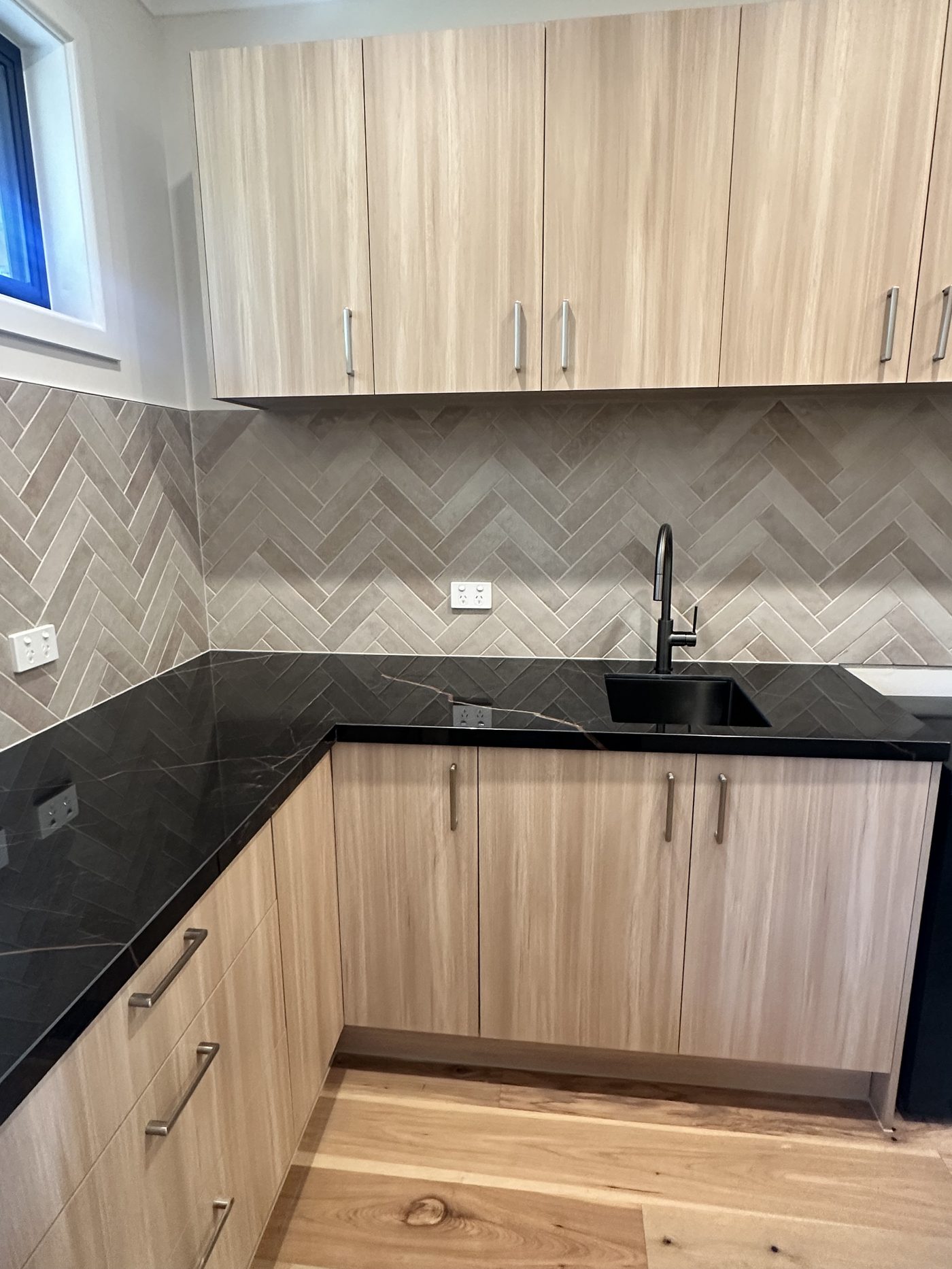
Palette: what coastal actually means
Coastal palettes in Australian kitchens are anchored in white, soft blue-grey, warm linen, and sandy neutrals. The key is warmth — cool white-and-grey reads as Scandinavian, not coastal. Introduce warmth through: natural stone or timber accents, warm-white task lighting (2700–3000K), and materials that have grain and texture (rattan, linen, ceramics) in the styling. The cabinets themselves can be clean and simple — the warmth comes from what's around them.
Materials that define the coastal aesthetic
Engineered stone with subtle movement (a soft Calacatta look rather than stark white) reads well in a coastal kitchen. Natural limestone or travertine tile brings genuine texture and organic character. A handmade ceramic tile for the splashback — slightly irregular in surface and colour — adds an artisanal warmth that factory-perfect tiles can't replicate. Raw timber elements (a floating shelf, a timber bar at the island) bridge the indoor-outdoor connection.
The coastal kitchen works hardest when it has a physical connection to the outdoors — a door or window that opens to a garden, deck, or view. Without that connection, the aesthetic can feel like a reference to somewhere you're not, rather than an extension of where you are.
Avoiding the coastal cliché
The version that dates quickly is the one that leans on obvious coastal accessories rather than coherent material and colour choices. The version that lasts is defined by its palette and material quality — it happens to feel coastal because those are the materials and colours that reference the Australian coastal environment, not because there are shells on the windowsill.
Frequently asked questions
Related but distinct. Hamptons is a specific American-derived aesthetic with defined elements (shaker profile, marble, decorative hardware). Coastal is broader and more Australian — it can use a wider range of materials and reads as more relaxed and less formal than the structured Hamptons approach.
Brushed chrome or brushed nickel for a clean coastal read. Natural ceramic or porcelain knobs for a more artisanal approach. Matte black reads more contemporary and slightly less coastal but works in a more minimal interpretation of the style.
Yes. The coastal aesthetic is as much about light, palette, and materiality as it is about geography. A well-lit inland kitchen with warm stone and natural textures reads as coastal without needing to be on the water.
Large-format natural stone look (limestone, travertine effect) or a textured matte porcelain in sand, cream, or warm grey. Avoid high-gloss tiles that reflect harshly. The floor should feel grounded and natural, not polished.