Go to ceiling height with upper cabinets
The gap between standard-height upper cabinets and the ceiling is dead storage space that accumulates grease and dust. Ceiling-height cabinets add meaningful storage and make the kitchen feel taller rather than lower. The additional cost is $800–2,500 depending on the height difference, but the storage gain is real and the visual effect is significant. Use the upper section for items used less frequently.
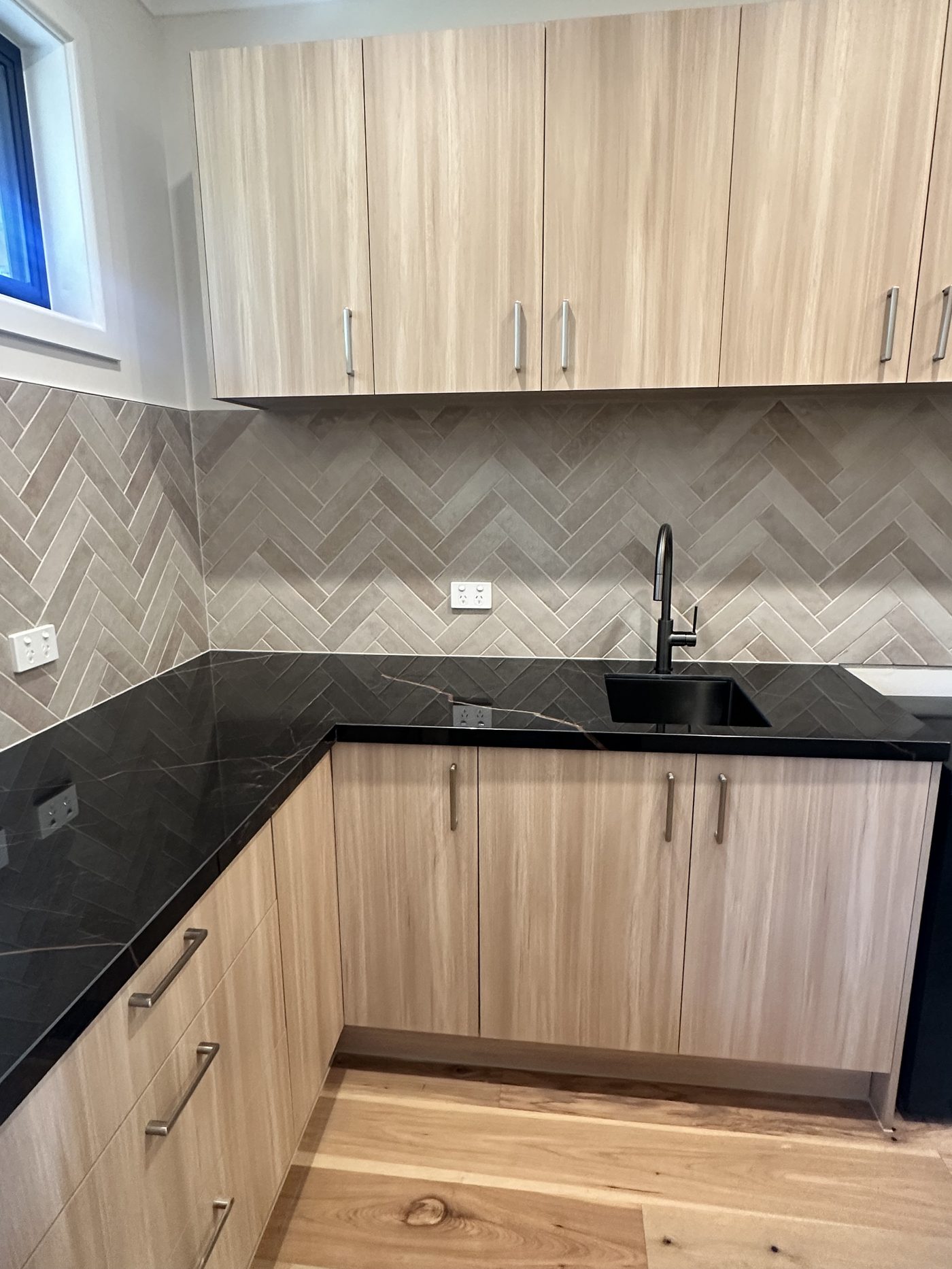
Use light colours throughout
Light-coloured cabinets, benchtops, and walls reflect light and make a compact space read as larger. This isn't just aesthetic advice — it's measurably effective. A white or very light grey kitchen of 6m² will feel genuinely larger than the same kitchen in dark grey. If you want a dark accent, use it on the island or lower cabinets only, with light uppers.
Drawers over doors, everywhere possible
In a small kitchen, every cubic centimetre of storage matters. Drawers give you 100% access to the full depth of the cabinet. Lower cupboard doors give you access to maybe 60% of the space (the back quarter is awkward to retrieve from). Converting lower door cabinets to full-height drawer stacks is the single most impactful storage improvement in a compact kitchen.
Pull-out bins, cutlery inserts, drawer dividers, and pull-out pantry systems all increase the usable capacity of your cabinets. A cabinet maker can specify these at the design stage — they're much harder to retrofit later.
Integrated appliances free up bench space
In a small kitchen, every 600mm of bench space is valuable. A microwave on the bench occupies 600–900mm of your most usable surface. A microwave in an upper cabinet, or a microwave drawer integrated into the cabinetry, frees that bench space entirely. The same applies to toasters and other appliances — consider a dedicated appliance cabinet that can be closed when not in use.
An island isn't always possible — consider a peninsula
A freestanding island requires 900mm clearance on all sides to work properly. In a kitchen under 12m², this often isn't achievable. A peninsula (island connected to a wall or cabinetry on one end) requires clearance on only two sides, making it workable in more compact spaces. It also provides additional structural support for a cantilevered benchtop seating area.
Choose a simple splashback
In a small kitchen, a busy splashback pattern competes for attention and makes the space feel more cluttered. A clean, simple material — white subway tile, glass in a tone that matches the cabinetry, or an extension of the benchtop material — keeps the visual read clean and makes the space feel larger.
Frequently asked questions
- What's the smallest practical kitchen layout?
A galley kitchen (two parallel runs of cabinetry) can function well from as little as 5–6m² if the corridor width is at least 1000mm. Below that, two people cannot use the kitchen simultaneously. A single-wall kitchen can work in a studio or small apartment from 3–4m² but storage is the primary constraint.
- Do open shelves work in small kitchens?
Open shelves look great in photographs and work poorly in daily life in most kitchens. They collect grease, require constant curation to look presentable, and provide less usable storage than equivalent closed cabinetry. In a small kitchen where every cubic centimetre matters, replacing upper cabinets with open shelves to "open the space" almost always reduces functionality more than it gains visually. Use one run of open shelves for display items if you want the look — not your whole upper section.
Ready to get clearer quotes?
Tell us about your project and we'll connect you with the right cabinet makers and installers for your budget and location.
Your details are sent to relevant providers only. We don't sell your data. See our privacy policy.