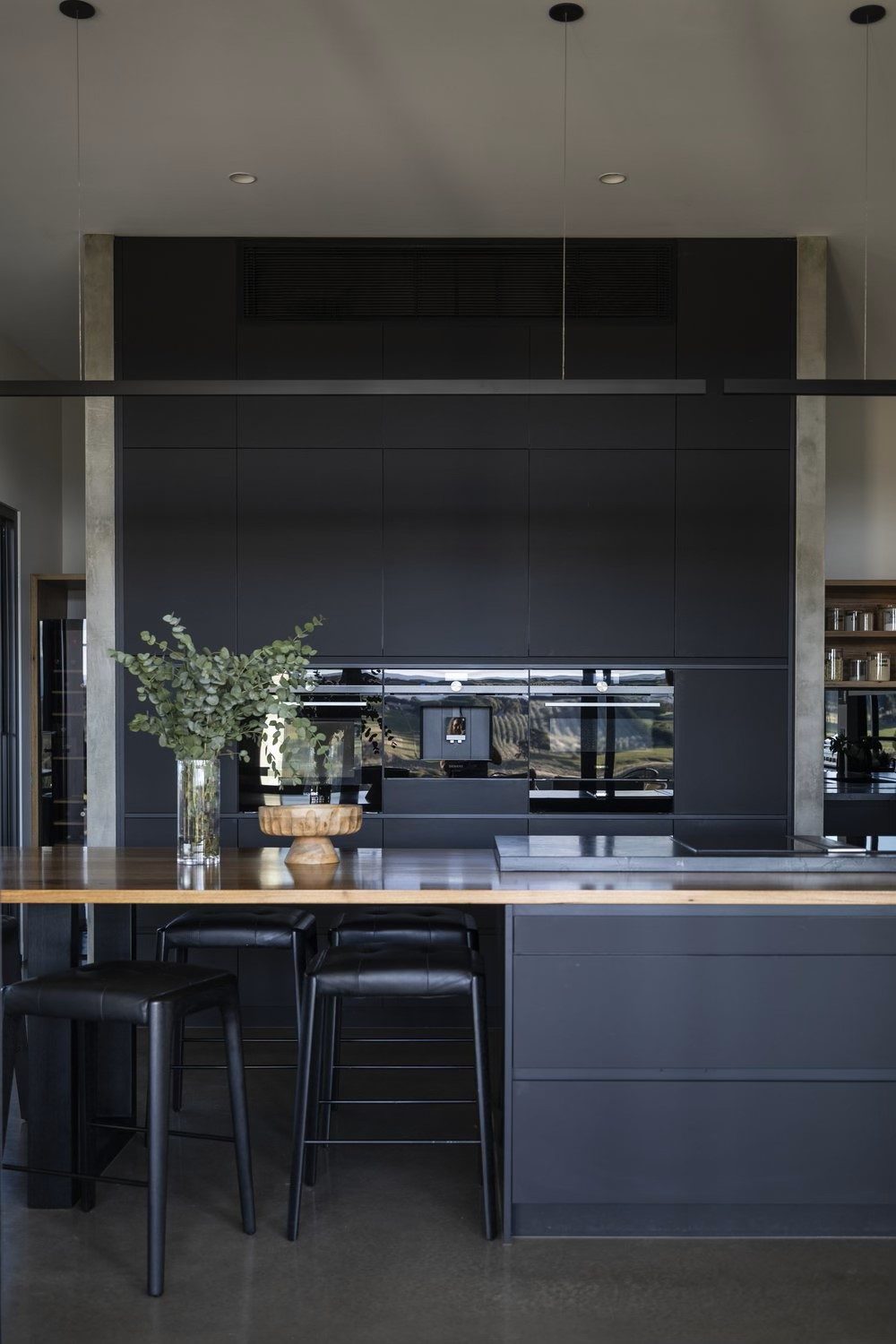
What makes a black kitchen work
A well-executed black kitchen is one of the most striking residential design statements available. It works by committing fully to the palette — using darkness to create drama and depth, balanced with high-contrast elements (light stone benchtops, warm timber accents, brass hardware) to prevent the space from feeling oppressive.
Where black kitchens fail is in half-measures — matte black lowers combined with white uppers without strong design intent, or black doors in a poorly lit space that makes the room feel smaller and darker than it needs to.
Key design decisions in a black kitchen
Finish matters enormously. Matte black is forgiving — it doesn't show fingerprints or imperfections in door profiles. Gloss black is dramatic but shows every fingerprint, every spec of dust, and every imperfection in the cabinet construction. Matte is the practical choice for daily-use kitchens.
Light sources need more attention. Dark cabinets absorb light rather than reflecting it. Good under-cabinet lighting, well-positioned ceiling fixtures, and natural light sources are more important in a black kitchen than in a light one.
Benchtop contrast defines the kitchen. A black kitchen with a white or light grey stone benchtop creates a classic high-contrast look. A black kitchen with a dark stone benchtop is more dramatic but requires careful management of the overall light level in the space.
What a black kitchen costs
The cost of a black kitchen is not materially different from a comparable white or grey kitchen — the premium comes from the quality of execution, not the colour. A mid-range black kitchen renovation with quality 2PAC doors and stone benchtop typically costs $28,000–$55,000.