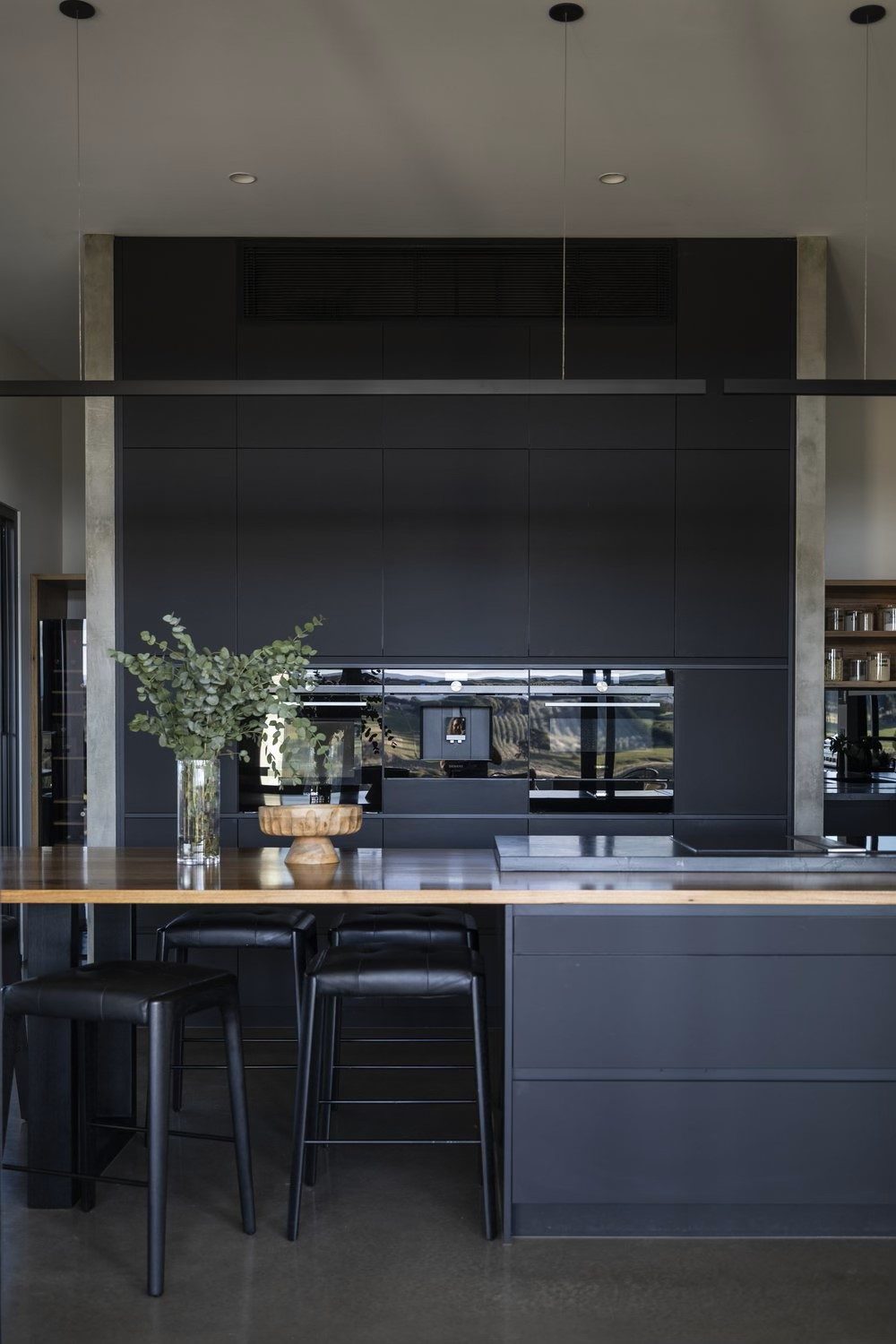
How much space do you need for a kitchen island?
A kitchen island requires a minimum of 900mm clearance on each side that is used for circulation or work. In practice, for comfortable two-person use, 1,000–1,200mm clearance is preferable. This means your kitchen needs to be at least 3,600mm wide before a standard 900mm-wide island becomes practical.
Islands in smaller spaces often work better as peninsulas — connected to the main cabinet run at one end — which reduces the clearance requirement on one side.
What a kitchen island costs
A freestanding kitchen island (custom made, not a furniture-store piece) typically costs $3,000–$9,000 as a standalone item — cabinetry, benchtop, and any electrical or plumbing integrated into it. If the island incorporates a cooktop, the cost increases significantly due to the rangehood requirement above it.
Island cooktops — the rangehood challenge
Positioning a cooktop in an island requires a ceiling-mounted island rangehood above it. These are significantly more expensive than wall-mounted units (typically $800–$3,000 vs $400–$1,200 for equivalent extraction) and require specific ceiling structural and ducting considerations. Confirm your ceiling can accommodate the ductwork before committing to an island cooktop.
Island height — the decision most people get wrong
Standard bench height is 900mm. This works for food preparation. If you want to use the island as a breakfast bar, a higher surface (1,050–1,100mm with bar stools) creates better ergonomics for seated dining. Having both heights in the same island — a lower preparation zone and a raised dining ledge — is a popular solution but adds cost and requires careful design.
What to put in an island
Storage: Deep drawer banks on the main-use side of the island are the highest-value internal use of island cabinetry. Drawer stacks in a deep island are more usable than shelved cabinets — items at the back of shelves become inaccessible in normal use.
Sink: Moving the sink to the island repositions the primary work zone and requires plumbing relocation. This works well in open-plan kitchens where you want to face the living area while working.
Power: Floor-fed or benchtop-integrated powerpoints in the island are useful for appliances. Discuss with your electrician — floor trenching or conduit routing affects cost.