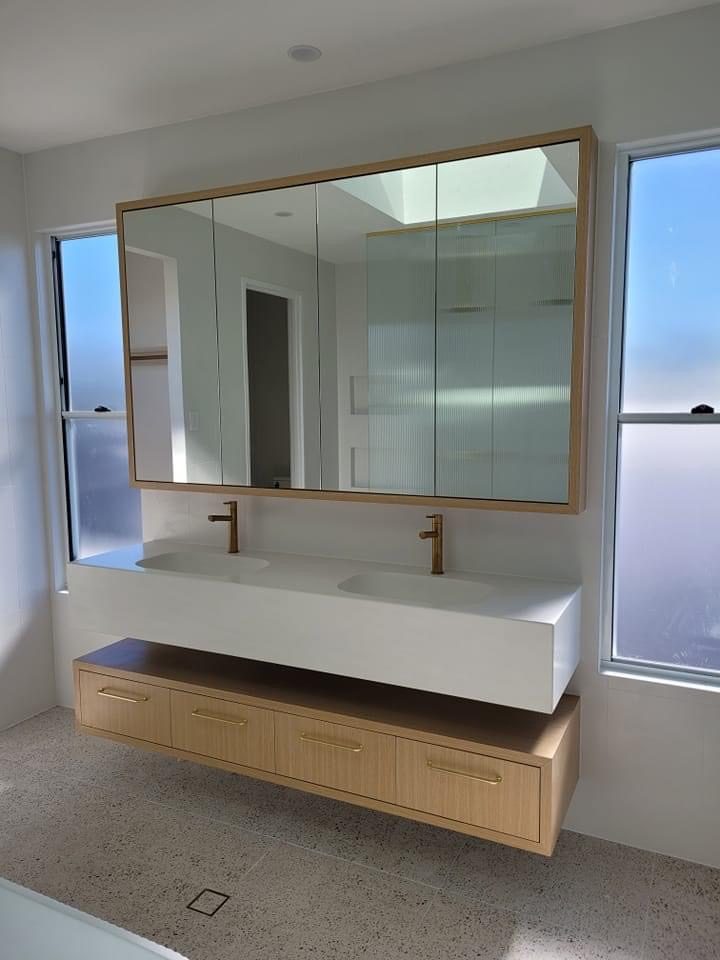
How timber is used in Australian kitchens
Timber in modern Australian kitchens rarely means all-timber construction — it more often means timber veneer cabinet fronts, solid timber benchtops in specific zones (an island top, a breakfast bar), or timber-look thermolaminated profiles that approximate the warmth of natural wood at lower cost and better durability.
The most common application is lower cabinet doors in a timber veneer or oak-look finish, combined with white or light-painted upper cabinets, creating a two-tone approach that brings warmth without overwhelming the space.
Timber species and finishes in use
American oak veneer: The most popular choice for contemporary timber kitchens in Australia. A warm, light grain that works with most benchtop and hardware choices. Can be left natural, limed, or stained.
Blackbutt and spotted gum: Australian hardwoods with characterful grain. More often used for benchtops and open shelving than full cabinet fronts.
Tasmanian oak: Lighter and finer-grained. Works well in Scandi-influenced designs.
Timber-look thermolaminate: Not real timber, but modern timber-effect laminates from suppliers like Polytec have become convincing enough that they're used extensively in mid-range renovations. Easier to maintain than real timber and significantly less expensive.
Timber benchtops — the honest considerations
Solid timber benchtops are beautiful but require maintenance. They need regular oiling, are susceptible to water damage around the sink, and will show wear. Most homeowners use timber benchtops in lower-impact zones — an island top or breakfast bar — while using stone at the main sink and preparation areas.